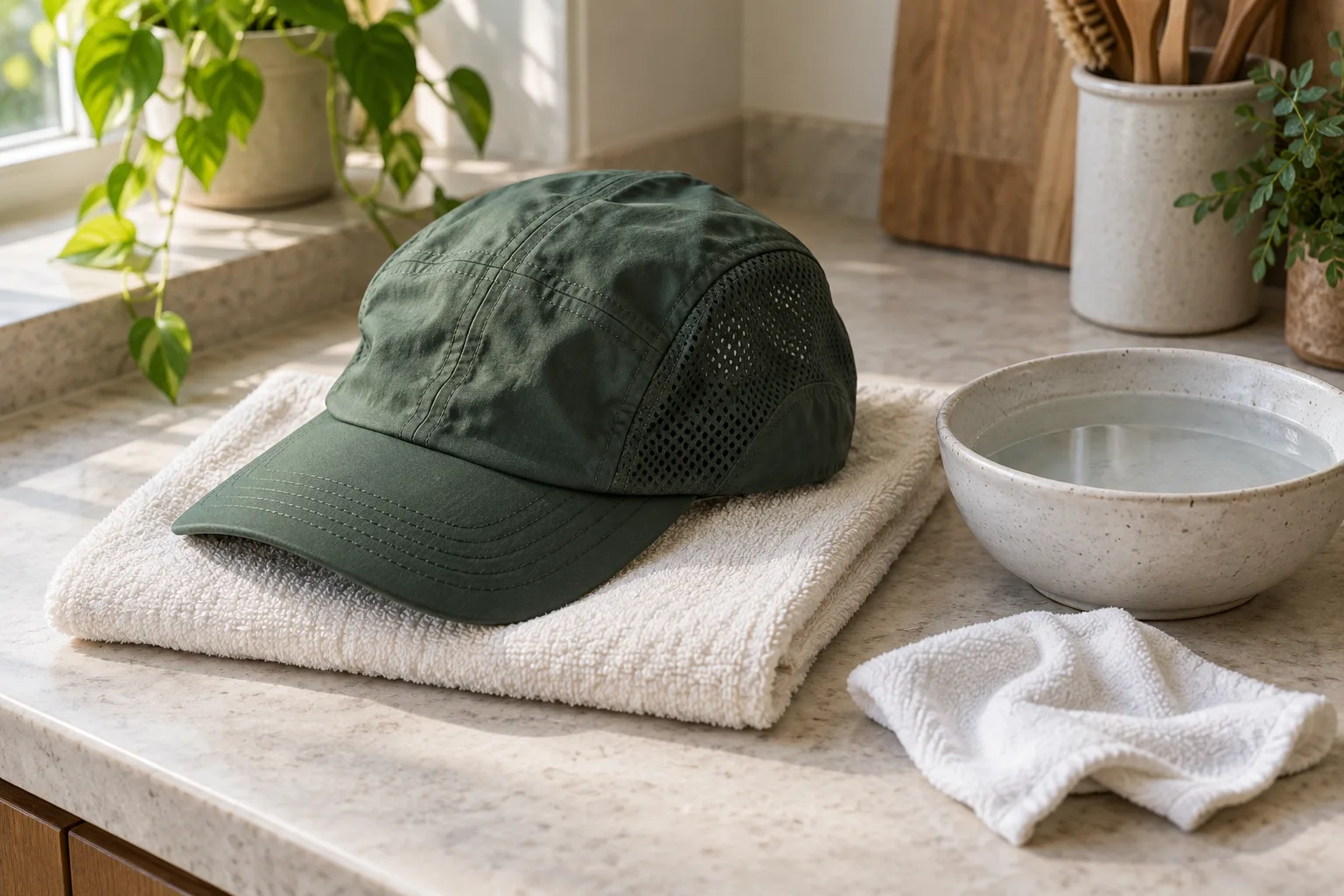
A running cap often stays in the kit bag after everything else has gone into the wash. Before long, its sweatband, brim and adjustment strap need attention. Giving it a little care is straightforward once you know which cleaning method its maker permits.
Start with the instructions for your particular cap. A soft running cap and a structured everyday cap can look similar in a photograph but have different construction and care requirements. This guide helps you organise the job; it does not replace the label or promise that one method suits every hat.
Find the instructions before adding water
Look inside the cap, around the sweatband and beside the adjustment strap. Check any attached care label, then the manufacturer's information for the exact model. Save a clear photograph of the instructions with your purchase information so you can find them again if the small print fades.
Read washing and drying guidance separately. GINETEX explains that a number inside a wash symbol is a maximum temperature, while bars underneath call for a gentler process. A crossed-out washing symbol rules out washing; a hand-wash instruction is not permission to choose any machine programme. Its care-symbol reference also explains the separate drying symbols.
If the label is missing or the online advice appears to describe a different cap, ask the manufacturer before soaking it. The fibre percentage alone does not tell you everything about the brim, finishes or attached details.
Check the whole cap, not only the crown
Set it on a clean surface and take a moment to look at the parts that will be handled during cleaning:
- The inner sweatband and its stitching.
- The edge and underside of the brim.
- Any mesh panels or printed decoration.
- The adjustment strap, buckle or hook-and-loop fastening.
- Loose threads, lifting trim or an area that already looks worn.
This is a useful point to separate cleaning from repair. A loose fastening will still need attention after a wash. If something has started to detach, photograph it and ask the maker about an appropriate repair instead of rubbing harder around the damaged area.
Empty the cap of anything tucked inside it. Decide where it will dry before you begin, especially if you need it for the following morning. That small bit of planning avoids choosing a faster, unapproved drying method later.
Choose a method the maker actually allows
Do not treat “running cap” as a universal laundry category. For example, Ciele's published instructions for its TRLCap SC Comp model specify a cold wash and hanging to dry, and exclude tumble drying, bleach and softener. Those are instructions for that model, rather than a recipe to transfer to every cap.
For your own cap, gather the permitted cleaning products and equipment first. Check both the cap's instructions and the detergent directions. An extra product is not automatically useful just because it is marketed for sports kit. If you are considering a stain treatment that the maker does not discuss, ask before applying it to a visible panel.
If hand washing is permitted, follow the stated water temperature and handling instructions rather than improvising a long soak. GINETEX's hand-washing guidance advises careful handling, rinsing and gentle removal of excess water rather than rubbing or wringing. Keep any additional restrictions from the cap manufacturer in view.
If machine washing is permitted, use the specified programme and temperature. Do not infer machine compatibility from a removable label, a flexible brim or a successful wash of another cap. Likewise, a household dishwasher is not a substitute for an approved textile-care process.
Make drying part of the care routine
Follow the drying direction as carefully as the washing direction. Permission to wash does not automatically include permission to tumble dry. GINETEX distinguishes machine drying from natural drying methods such as line or flat drying, so check which applies to your item.
Choose a suitable place where the cap can stay undisturbed while following those instructions. Do not add a radiator, hairdryer or other heat source simply because you are short of time. If you cannot tell whether the maker permits a particular method, leave it out and seek clarification.
Before putting the cap away, check the sweatband and any folded areas as well as the outer fabric. Keep damp kit separate from the clean, ready-to-wear items in your bag. Once the cap is dry, check that its fastening operates normally and that nothing has become loose.
Leave yourself a useful note for next time
A short care note can be more helpful than buying another laundry accessory. Record the exact model, where its instructions are saved and the method the maker allows. If it needs more drying time than your usual evening routine provides, plan its next clean earlier.
You can use the same habit when choosing other running kit: look at maintenance before deciding whether an item fits your life. Our guide to running tops for changing weather includes care-label considerations alongside layering and practical fit. A manageable routine starts with knowing what you have, what its instructions say and when it will be ready to wear again.