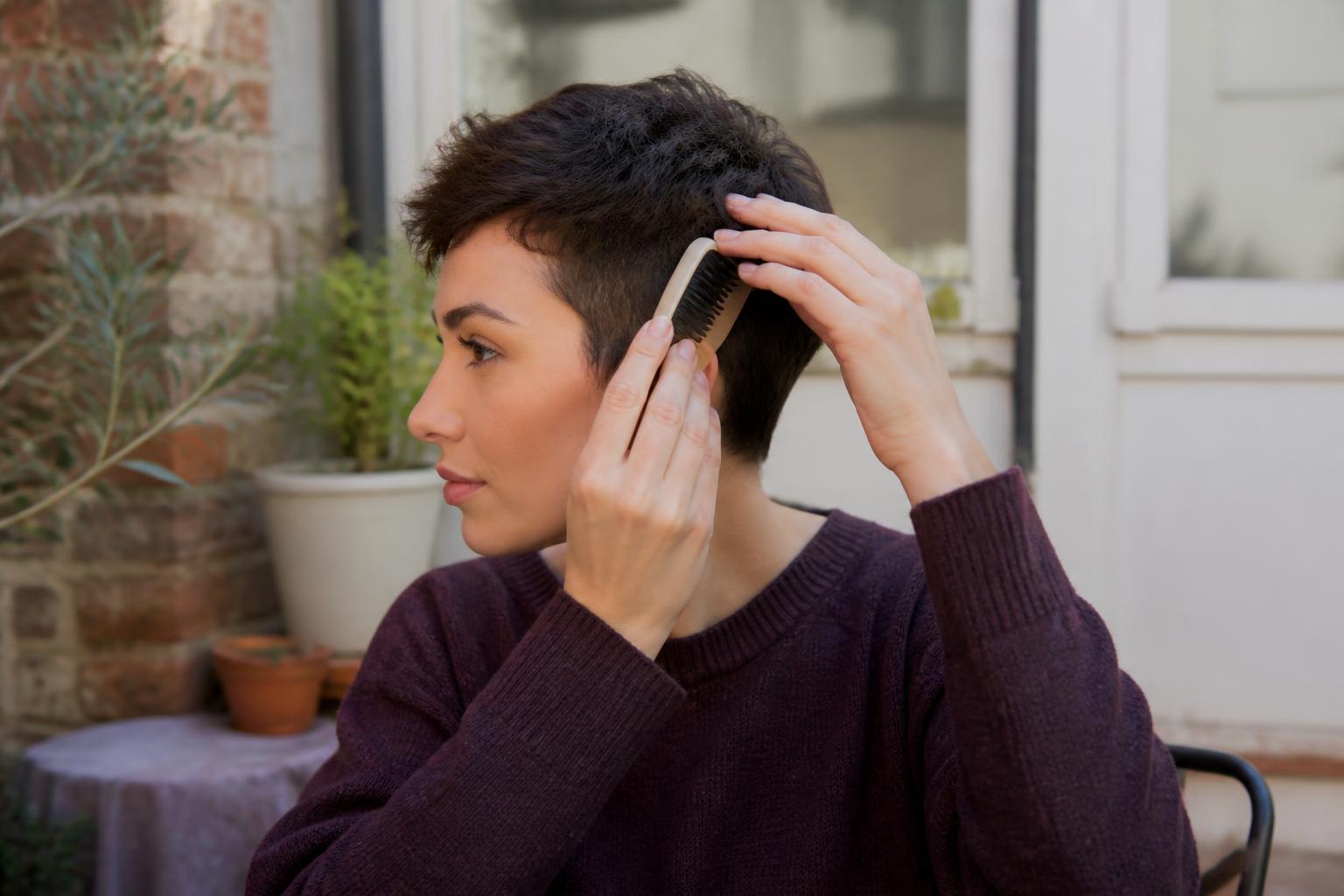
Short hair is often sold as the low-maintenance option, but the wrong tool can make it slower to style, harder to section and more likely to snag. What saves time is not owning more kit. It is choosing tools that suit shorter lengths, the shape of your cut and the way your hair behaves when wet, dry or between washes.
For most people, the best hair styling tools for short hair are smaller, lighter and easier to control close to the scalp. They should glide rather than drag, help you separate short sections cleanly, and let you dry or refresh without rough handling. That matters whether you wear a cropped cut, a bob, a tapered style, short coils, a pixie or anything in between.
What short hair actually needs from a styling tool
Short hair changes the way a tool works. A paddle brush that feels fine on long lengths can be awkward on a jaw-length bob. A comb that looks neat in a drawer may be too fine for curls that need more space. The shorter the hair, the more obvious the tool shape becomes, because there is less length to absorb poor technique.
Length is the first factor. Very short cuts need precision close to the scalp. That usually means narrower tools, shorter rows of bristles or teeth, and handles that are easy to turn in the hand. A large brush head can push hair flat when you are trying to lift roots, or miss shorter sections around the crown, nape and hairline.
Texture matters just as much. Fine, straight short hair often benefits from gentle detangling and clean sectioning, without too much tension. Wavy hair usually needs tools that preserve pattern rather than fluff it out. Curly and coily short hair often responds best to wider spacing, flexible detangling and accessories that do not catch at the roots. Dense short hair can also need a stronger grip in the hand, because you may be working in smaller sections but meeting more resistance.
The cut itself changes what is useful. A blunt bob, a pixie with longer top sections, short layered curls and a close-cropped style all ask different things from a brush or comb. If your cut has shape around the face, ears or neckline, you need a tool that can get into those areas neatly. If you rely on clips while drying or setting, they need to hold short lengths without sliding straight out.
Grip is often overlooked. Styling short hair usually means working closer to the mirror, changing angles quickly and using smaller movements. A tool that feels balanced and comfortable in the hand reduces the instinct to tug. That is one reason we favour practical, easy-to-control options over oversized tools that look impressive but are clumsy on shorter lengths.
Which brushes and combs work best for short styles
A short style rarely needs every type of brush and comb. Most routines work better with two or three well-chosen tools. If you are updating your kit, start with brushes and combs suited to everyday detangling and sectioning.
A detangling brush is the best place to start for many people. On short hair, it helps most when you want to remove shed hair and smooth product through without catching at the ends. It is especially useful on wash day, when conditioner or a leave-in gives enough slip for the brush to move through gently. For short curls, coils or dense waves, work in smaller sections and start from the part of the section that is least tangled, rather than brushing straight down from the root.
A wide-tooth comb is often the better choice when the hair needs space. This is the comb we reach for when preserving curl definition matters more than sleekness, or when product needs distributing without breaking up clumps too much. It is also useful for a co-wash routine, when you want to move cleanser or conditioner through the hair with minimal friction. On very short textured hair, a wide-tooth comb can be more comfortable than a brush because you can control exactly where each pass begins.
A tail comb earns its place when the cut relies on neat sectioning. Clean parts help with applying gel or cream, clipping sections to dry, laying edges without disturbing the rest of the style, or separating out fringe and crown areas. The tail is the real benefit here. It lets you divide short hair precisely, which is often the difference between a quick routine and a frustrating one. The comb teeth themselves are best used lightly, mainly for sectioning and refining rather than aggressive detangling.
Edge-friendly options matter if your shortest hairs are around the hairline, sideburn area or nape. In practice, this means choosing tools with smooth seams, rounded tips and enough control to work in small spaces. A compact comb or a smaller brush is usually more useful than anything oversized. You want to guide and smooth, not scrape.
The key is matching the tool to the job. Use a detangling brush for slip and speed, a wide-tooth comb for texture and spacing, and a tail comb for clean sections. Short hair usually looks better when each tool does one job well, rather than one tool trying to do everything.
The tools that help with drying, shaping and refresh days
Drying and reshaping short hair can be quick, but only if the process is gentle. A rough towel, heavy-handed rubbing or constant rewetting can turn a simple style into frizz, flattening or unnecessary breakage. We keep the routine straightforward with a few supportive tools from our drying and overnight care range.
A good drying towel is one of the easiest upgrades. For short hair, a bulky bath towel is often more trouble than help. It is heavy, it shifts around, and the surface can rough up the hair cuticle. A lighter microfibre towel or drying cloth is easier to wrap or press around short sections, especially at the back and sides. Instead of rubbing, blot and squeeze. That removes excess water without disturbing the shape you want to keep.
Spray bottles are especially useful with short hair because refresh routines tend to be targeted. You may only need to revive the crown, fringe, top layer or one side that has flattened overnight. An empty refillable spray bottle lets us mist lightly rather than soaking the whole head. That saves time and avoids the cycle of over-wetting, over-product use and longer drying. For many short styles, a small amount of water followed by cream or gel is enough to bring the shape back.
Hands-on tools matter too, and by that we mean your own hands as much as anything you buy. Short hair often responds best to controlled finger styling. Rake product through with your fingers when you need separation. Smooth over with the palms when you want sleekness. Twist or coil small sections around a finger when definition needs refreshing. Your hands are often the gentlest shaping tool in the routine, particularly on short textured cuts.
For wash day and styling, products and tools need to work together. If you are cleansing, conditioning and then styling straight away, it helps to keep the routine compact. Our wash day and styling essentials include the kinds of products people typically pair with brushes, combs and sectioning accessories. As always, check the product page for current directions and full INCI, especially if you are comparing hold, slip or how a formula layers with a leave-in or oil.
A scalp massager can also support the washing stage, but it is a cleansing tool, not a shortcut to vigorous scrubbing. On short hair, it can help distribute shampoo across the scalp without using nails, which some people find more comfortable and more thorough around dense or close-cut areas. Use light pressure and let the tool move the cleanser, rather than grinding it into the scalp.
Clips, pins and bands for control without pulling
Short hair still needs control during styling, but the accessories have to match the length. Clips that are perfect for long hair can be oversized for a bob or crop, and bands that grip too tightly can strain the hairline. The right accessories should hold securely without forcing you to pull the hair harder than necessary. Our hair accessories for sectioning and finishing short styles are chosen with that everyday practicality in mind.
Sectioning clips are useful whenever you are drying in stages, applying product evenly or separating the top from the sides and back. For short hair, smaller clips are often more effective than large claw styles because they can catch shorter sections without swallowing the whole shape. If your hair is layered, clip by area rather than trying to gather too much into one section.
Pins help when you need temporary control or a subtle finish. They can secure a side section while it sets, hold a front piece away while you diffuse or air dry, or tidy a style without the tension of a tight band. The most comfortable pins are the ones you do not need to force in. If they are scraping the scalp or springing straight back out, they are probably the wrong size or being used on too much hair at once.
Bands and scrunchies still have a place in short-hair routines, particularly for mini puffs, half-up styles, pineapple variations on slightly longer short curls, or keeping hair back at the gym. The main point is tension. A band should hold the style, not bite into the hairline. Soft-covered options are often kinder for repeat use, especially if the same area is tied back daily.
If you style edges or keep shorter front sections neat, choose accessories that allow you to place the hair first and secure it second. That avoids the common mistake of pulling the section tighter and tighter just to make the accessory stay put. Short hair usually behaves better when it is guided into place, then lightly secured.
How to build a simple short-hair kit for your routine
The most useful short-hair kit is not the biggest one. It is the set of tools you actually reach for, organised around when you need them. For most routines, that means one wash day group, one daily styling group, and a few extras for the gym, travel and overnight care.
For wash day, keep the basics together. A detangling brush or wide-tooth comb, depending on your texture, is usually enough for working through conditioner or a leave-in. Add a drying towel or cloth, ideally microfibre, and if you like more precise parting or product placement, include a tail comb. If you use a scalp cleansing tool, keep it with your shampoo so it is part of the same process rather than an extra step you forget.
For daily styling, think in terms of speed. A compact brush or comb, a spray bottle for controlled misting, and one or two clips or pins will cover most short styles. If your routine includes smoothing the hairline, keeping a smaller edge-friendly comb in the same pouch saves rummaging through larger tools that are awkward to use near the face.
For gym bags, the best kit is the one that resets the hair quickly. A small band or scrunchie if your length allows it, a couple of pins or clips, and a refillable spray bottle are usually enough. If you shower after exercise, a lightweight drying cloth takes up less space than a full towel and is easier to use on short hair in a changing room.
For travel, pare it back further. Short hair usually does not need a full duplicate of everything at home. One comb or brush, one drying cloth, a few accessories and the products you know layer well together are enough for most trips. If you are flying, decant only where appropriate and keep an eye on current UK airport liquid rules for hand luggage. Those are not the same thing as wider EU practice, and they can change by airport, so it is worth checking your departure airport directly.
Overnight care depends on texture and style. Some people with short straight or wavy hair need very little beyond making sure the hair is dry before bed. Short curls, coils or set styles may benefit from a sleep cap or buff to reduce friction and help the style last. We do not believe in overcomplicating this. If overnight protection helps you do less in the morning, it earns its place. If it does not change the result, you probably do not need it.
It is also worth being realistic about overbuying. Short hair does not automatically need fewer products, but it usually benefits from fewer tools with clearer roles. Before adding another brush or accessory, ask what problem it solves that your current kit does not. Better grip, gentler detangling, cleaner sectioning and more comfortable hold are all good reasons. Buying duplicates of the same function rarely is.
At ManeDivas, operated by Fleeta Limited, we focus on practical tools and care staples that make everyday routines easier to manage. That means products and accessories people can actually use across wash day, styling, refreshing and overnight care, without promising miracles or turning a short routine into a long one. The right hair styling tools for short hair should help you move faster, handle your hair more gently and get a finish that still feels like your own.