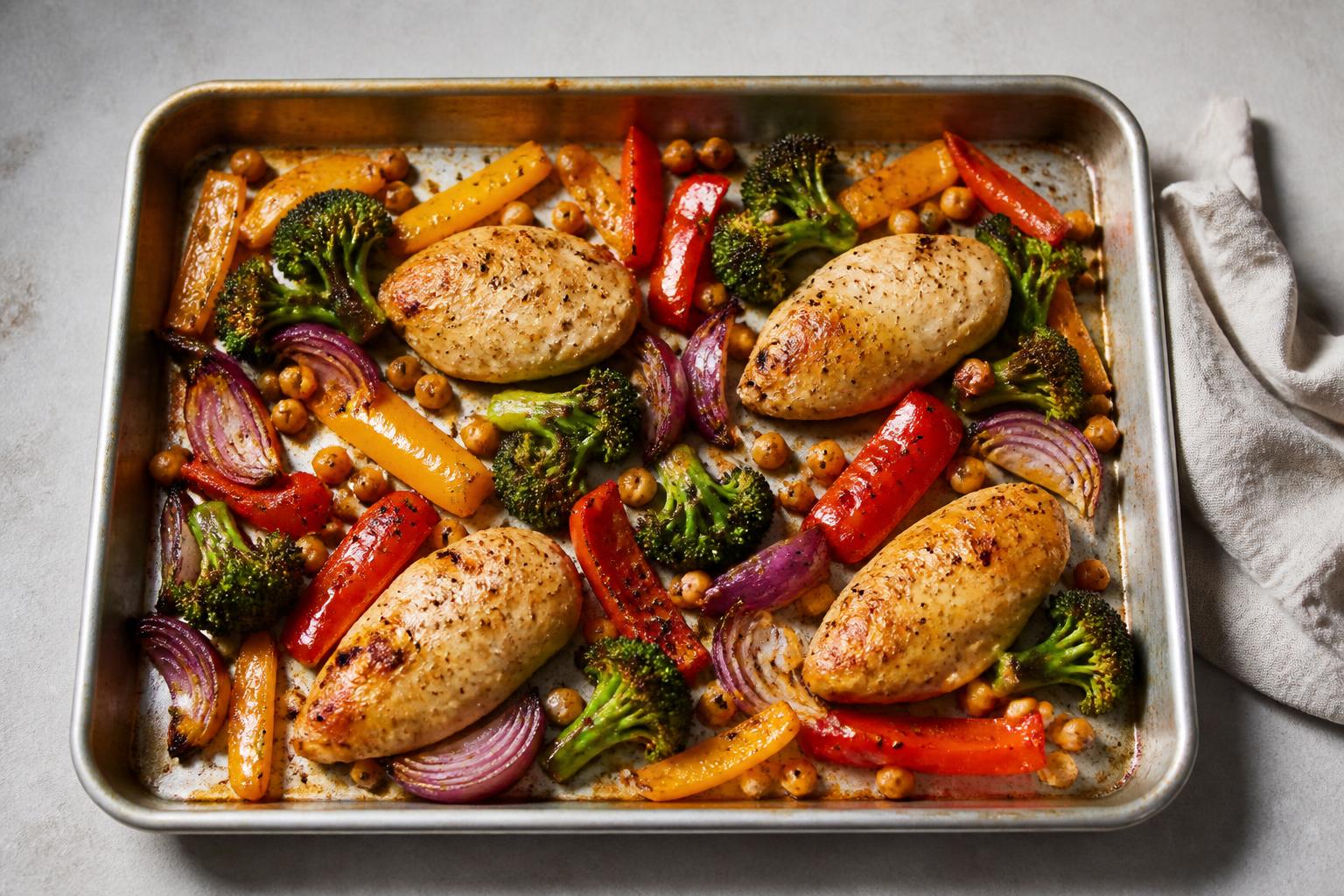
Cooking healthier meals does not need a spreadsheet, a supplement drawer or a set of rules that collapse the first time you want pasta. In everyday cooking, a healthy recipe is usually one that gives you a sensible balance of ingredients, enough fibre and protein to keep you going, plenty of plants, and a cooking method that does not lean too heavily on salt, sugar or saturated fat.
That means most people do not need a separate category of “good” foods and “bad” foods. What helps more is learning how to make familiar meals work better, with the ingredients already common in UK shops. That is where practical healthy food recipes earn their place, not as perfection, but as meals you can repeat on an ordinary Tuesday.
What makes a recipe healthy in everyday terms
A healthy recipe is not defined by one claim on the front of a packet or by cutting out an entire food group. It is better understood through four things, balance, variety, portion awareness and cooking method.
Balance means a meal is built from more than one nutritional job. Vegetables and fruit bring fibre, vitamins and bulk. Beans, lentils, fish, eggs, dairy, tofu or meat contribute protein. Potatoes, bread, rice, pasta and other grains provide energy. Fats such as olive oil, rapeseed oil, nuts, seeds or oily fish have their place too. A balanced meal does not have to include everything at once, but it should not rely on one element doing all the work.
Variety matters because no single ingredient covers everything. If lunch is always a chicken wrap with little else, or dinner is always pasta with cheese, you may get enough calories while missing out on fibre or a useful spread of micronutrients. Variety can be modest. Swapping chickpeas for lentils, broccoli for cabbage, or salmon for mackerel still counts.
Portion awareness is where many recipes drift away from healthy without anyone noticing. A stir fry full of vegetables can still become heavy if it is swimming in oil or served with an oversized portion of noodles. A yoghurt breakfast can turn into dessert if it is loaded with sweetened granola, syrups and large handfuls of dried fruit. Portion awareness is not about tiny servings. It is about proportions on the plate.
Cooking method often makes the difference between a decent meal and one that quietly becomes rich in energy, salt or saturated fat. Roasting, grilling, baking, steaming, poaching and stir frying with a moderate amount of oil usually help ingredients speak for themselves. Deep frying, heavy breading, repeated use of creamy sauces, and relying on processed meats can shift a recipe in the other direction.
This is also where labels and public guidance help more than food rules. In the UK, the NHS Eatwell Guide remains a practical reference point for everyday eating. If you want a clearer sense of what appears on packs and what it means in practice, our guide to understanding front of pack nutrition labels is a useful place to start.
How to build a balanced plate from common UK ingredients
A balanced plate does not need specialist ingredients. Most UK supermarkets, corner shops and market stalls carry enough to build one from basics.
A useful starting point is to think in parts. Fill around half the plate with vegetables or salad where that makes sense. Add a source of protein. Then add a starchy food or grain, ideally with some fibre. The exact shape changes by meal.
For breakfast, that might mean porridge made with oats and milk or a fortified unsweetened alternative, topped with banana, berries, chopped apple or a spoon of seeds. If you want more staying power, add Greek yoghurt or a boiled egg on the side. Wholemeal toast with eggs and grilled tomatoes also works well. So does plain yoghurt with fruit and a higher fibre cereal, provided the cereal is not mostly sugar.
For lunch, common UK ingredients make this easy. A baked potato with beans and a side salad gives carbohydrate, fibre and protein. A wholemeal pitta with hummus, chicken, cucumber and grated carrot does the same. Soup can be balanced too if it is not only liquid vegetables. Lentil soup with wholegrain bread, or tomato soup with a cheese and salad sandwich on wholemeal bread, is a practical meal rather than just a starter.
For dinner, think in combinations rather than recipes you must follow exactly. A tray of roasted peppers, onions, courgettes and carrots can become several meals. Serve them with salmon and new potatoes one night. Fold them into a chickpea and wholewheat couscous bowl the next. Add them to an omelette with a little cheese another day.
Beans and lentils deserve more attention in everyday cooking because they help with both fibre and protein. A chilli made with half lean mince and half kidney beans is still recognisably chilli. A lentil Bolognese, or a Bolognese stretched with red lentils, is familiar, filling and usually cheaper than a meat-only version. Tinned beans are useful here, just drain and rinse if you want to reduce some of the salt from the canning liquid.
Fish fits best when it is made ordinary rather than aspirational. Tinned sardines on toast with tomato and black pepper. Mackerel mixed into a salad with potatoes and green beans. White fish baked with lemon, peas and oven chips. Oily fish is worth including when you can, but healthy eating does not require every meal to be built around salmon fillets.
Eggs are one of the simplest building blocks for healthy food recipes because they work at any time of day. Vegetable omelettes, shakshuka, egg fried rice with leftover vegetables, and hard boiled eggs in a salad all make sense. With egg fried rice, using leftover cooked rice, plenty of frozen peas, carrots or spring greens, and a restrained amount of soy sauce keeps it practical and balanced.
Meat can still fit well, especially if you pay attention to cut, portion and frequency. Chicken thighs or breast, lean mince, pork loin and occasional beef can all sit comfortably in a balanced meal. What matters is what surrounds them. A plate of sausages and chips is different from a smaller portion of sausages served with mash, peas and onion gravy, plus extra greens. Processed meat is the item to keep more occasional.
Dairy and alternatives also have a role beyond breakfast. Milk, yoghurt and cheese contribute protein and nutrients, but portion size matters with cheese because it can bring a lot of saturated fat and salt. Fortified plant alternatives can be useful too, but it is worth checking whether they are unsweetened and whether calcium, iodine or B12 has been added where relevant.
If you want more practical examples, our piece on everyday high fibre ingredients for simple meals looks at the cupboard staples that make balanced meals easier to repeat.
The ingredients worth paying attention to on labels
Labels are not there to make you anxious. They are there to help you compare like with like. The most useful things to watch in recipe ingredients are salt, free sugars, saturated fat, fibre and protein.
Salt matters because it adds up quickly, especially when a recipe uses stock cubes, sauces, seasoning mixes, processed meat and cheese in the same pan. In the UK, front of pack traffic light labels can help at a glance. Red does not mean “never”, but it does tell you the product is high in that nutrient compared with others. For ingredients such as pasta sauce, baked beans, soups and ready-made marinades, checking salt per 100g is often worth the few seconds.
Free sugars are not only the spoonfuls you add yourself. They also appear in sweetened yoghurts, breakfast cereals, cereal bars, flavoured drinks, desserts, sauces and some “healthy” snacks. A recipe can look virtuous and still lean heavily on sweetened ingredients. If a granola recipe depends on a lot of syrup, coconut sugar and dried fruit, it is still a sweet food. Honey, agave and fruit juice concentrates count as free sugars too.
Saturated fat matters because many convenience ingredients bring more of it than people expect. Pastry, pies, creamy sauces, butter-heavy bakes, processed meats and generous amounts of cheese can shift a meal quickly. Coconut-based products can also be high in saturated fat, despite sometimes being marketed with a health halo. Looking at nutrition information per 100g helps more than relying on branding.
Fibre is often the quiet difference between a meal that fills you for an hour and one that keeps you comfortable and satisfied for longer. Higher fibre choices include wholemeal bread, oats, wholewheat pasta, brown rice, beans, lentils, vegetables, fruit, nuts and seeds. Labels help here too, particularly on breads, cereals, wraps and snack bars where fibre content varies a lot between products that look similar.
Protein is useful, but it is not magic. It helps with fullness and is important across the day, but many people do not need every snack and dessert to become a protein delivery system. Labels can help you compare yoghurts, milks, meat alternatives and convenience lunches, but a “high protein” claim does not automatically make a product broadly healthy. It may still be high in salt, saturated fat or sweeteners, or simply expensive for what it offers.
One practical habit is to compare products in the category you are actually buying. Compare one pasta sauce with another, one wrap with another, one yoghurt with another. That is more useful than comparing a sauce with dry lentils or a ready meal with raw chicken.
Simple swaps that change a recipe without making it joyless
The best swaps are the ones you will repeat. They do not try to turn chips into celery sticks. They keep the meal recognisable while improving the overall balance.
If you usually fry foods in a lot of oil, try shallow frying with less oil, oven roasting, grilling or using an air fryer where that suits the food. Chicken can still be crisp with breadcrumbs and a light brushing of oil. Potatoes can still be satisfying roasted with rapeseed oil and seasoning rather than deep fried.
Sauces are often where recipes become heavier than intended. A creamy pasta does not need to disappear from your life, but it can become an occasional choice while tomato-based sauces, vegetable sauces or lighter yoghurt-based dressings do more of the weekly work. You can also stretch rich sauces. Use less pesto and loosen it with pasta water. Mix crème fraîche with mustard and lemon rather than pouring in double cream. Add extra mushrooms, spinach or peas so the sauce coats more food without needing more fat or salt.
With mince dishes, using part lentils or beans is one of the easiest swaps available. It works in chilli, shepherd’s pie, tacos and pasta sauces. You keep the familiar taste and texture while improving fibre and often reducing saturated fat.
For snacks, the same principle applies. If you like something crunchy and savoury, roasted chickpeas, plain popcorn, oatcakes with hummus, or a small portion of nuts can sit alongside crisps rather than pretending to replace them every time. If you want something sweet, fruit with yoghurt, toast with peanut butter, or a lower sugar cereal with milk may work better as an everyday option than biscuits. The point is not to ban snacks, but to make the default choice a bit more useful.
Convenience ingredients are not the enemy either. Frozen vegetables, microwave rice, tinned fish, bagged salad and canned beans can all support healthy food recipes when time is tight. The trick is to choose versions with sensible seasoning and then build a meal around them. Microwave brown rice with edamame, frozen stir fry veg and an egg is a meal. Tomato soup with added cannellini beans and wholemeal toast is a meal. A fish finger sandwich can be improved with wholemeal bread, lettuce and a side of peas rather than being treated as a nutritional failure.
We have also looked at how to compare snack bars and convenience snacks on the label, which is useful if you are trying to make quicker choices in the aisle without overthinking every packet.
How to judge online recipe claims and nutrition trends
Online food advice is full of certainty, which is often a warning sign. If a recipe or eating pattern is presented as cleansing, hormone-fixing, metabolism-boosting or inflammation-erasing with no nuance, step back.
Detox claims are a common example. Healthy bodies already have systems for processing waste, mainly through the liver and kidneys. A recipe can be refreshing, high in fruit and veg, or lower in alcohol and ultra-processed foods without “detoxifying” you in any special way. If the claim depends on juices, teas, powders or a very restricted short-term plan, it is better treated as marketing than nutrition guidance.
High-protein promises need context. Protein can be helpful, especially if a meal would otherwise be mostly refined carbohydrate, but not every food needs a protein badge to justify itself. A high-protein yoghurt may be useful. A high-protein chocolate pudding is still a pudding. Ask what else the product contains, whether it is filling in real life, and whether you could get the same benefit from ordinary foods such as eggs, milk, yoghurt, beans or fish.
Low-carb framing can also be misleading if it implies that potatoes, oats, bread or fruit are the problem in themselves. For some people, reducing certain carbohydrates under professional guidance may be appropriate. For the general public, the more useful question is usually what kind of carbohydrate, what portion, and what comes with it. Wholegrain toast with peanut butter is different from a large serving of pastries. Boiled potatoes with fish and greens are different from a takeaway loaded with salt and fat.
Watch for claims that rely on before-and-after photos, personal anecdotes, “clean eating” language or lists of forbidden foods without a medical reason. Be cautious when a recipe is sold as healthy mainly because it is gluten-free, dairy-free, keto, paleo or plant-based. Those labels may matter for some people, but they do not automatically tell you about fibre, salt, sugar, saturated fat or overall balance.
Reliable primary sources are still the best anchor. In the UK, that usually means NHS guidance and official public health resources. Where rules differ, remember that food labelling and health claims can vary between the UK and the EU since Brexit, so a claim or pack format discussed by an overseas creator may not match what you see in British shops. For UK packaged food, front of pack traffic light labelling is voluntary but widely used. Ingredients lists, allergen labelling and nutrition panels remain central tools for checking what you are buying.
The simplest test for any trend is this. Does it help you make ordinary meals with ordinary ingredients, more consistently, without cutting out whole categories of food for no clear reason? If yes, it may be useful. If it depends on fear, expensive add-ons or impossible standards, it probably will not last long in a real kitchen.
Healthy eating is easier when we stop treating every meal as a referendum on our character. Most healthy food recipes are simply familiar meals made with a bit more thought, more plants, better proportions and fewer extremes. That is enough to be getting on with, and for most households, it is the approach that actually sticks.